The Power of Reading and the Beauty of Calling 『That Book Woman』
“How beautiful are the feet of those who bring good news!” (Romans 10:15)
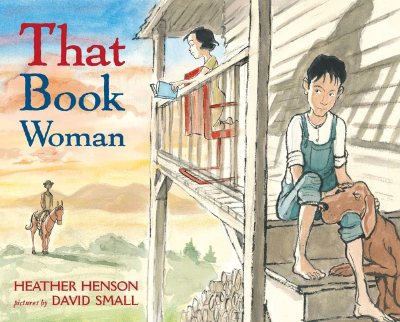
1. A Miracle Arriving Through the Blizzard
Set during the Great Depression of the 1930s in the Appalachian highlands of Kentucky, That Book Woman is rooted in an inspiring historical reality. When bank failures and widespread poverty swept the nation, President Franklin D. Roosevelt’s Works Progress Administration (WPA) launched a pioneering initiative for remote communities lacking schools and libraries: the Pack Horse Library Project.
Between 1935 and 1943, approximately two hundred dedicated women rode horses and mules across rugged mountain passes to deliver reading materials to more than 100,000 isolated residents. Known as the “Book Women,” they braved snow, rain, and sheer cliffs to place books directly into the hands of mountain families. Kentucky-born author Heather Henson captures this remarkable chapter of history through the intimate perspective of a mountain family discovering the transformative power of the written word.
Cal, a young mountain boy, cannot read. Working from dawn to dusk alongside his father to tend the family farm, he feels deep resentment toward his older sister, Lark, who spends every spare moment buried in a book. One afternoon, a strange woman on horseback rides up their steep trail and unpacks a pair of bulging saddlebags. To Cal’s astonishment, the bundle contains books—and even more surprisingly, they are lent completely free of charge, with a promise that she will return every two weeks to trade them for fresh ones.
True to her word, the Book Woman visits biweekly through wind, rain, and sleet. One bitterly cold winter afternoon, as a blinding snowstorm blankets the mountains, a faint tapping sounds at the cabin window. It is the Book Woman, wrapped tightly against the freezing gale. Mindful of keeping the family warm, she does not even ask to come inside; she merely slips fresh books through a crack in the window and turns her horse back into the storm. Watching her silhouette vanish into the howling snow, Cal is struck by profound wonder: “What is in these books that would make someone risk her life to bring them to us?”
Overcome with curiosity, Cal hands a book to his sister and asks quietly, “Teach me what it says.” Without mockery or laughter, Lark gently begins to guide him through the syllables. By the following spring, when the Book Woman returns, Cal is able to read aloud to her, offering his newfound literacy as a gift of heartfelt gratitude. The story closes on a quiet evening with brother and sister sitting side by side on the porch, peacefully reading together into the twilight.
2. Christian Faith and the Essence of Reading
While the value of literacy is widely celebrated in modern society, deep reading holds an even more fundamental significance within the Christian tradition. Christianity is quintessentially a religion of the Word. Over fifteen centuries, God chose to reveal His character, human history, and redemptive purpose through the written text across approximately forty human authors. Reading and meditating upon Scripture remains the primary channel of communion with God. Yet a believer's reading should not be confined strictly to devotional works. While Scripture represents God's special revelation concerning salvation, literature, history, science, and philosophy represent the realm of common grace—tools that equip humanity to understand and steward the world God created.
Faith is not an irrational abandonment of the intellect; it is a higher discipline that sharpens and sanctifies reason. By developing a broad intellectual foundation through rigorous reading, Christians cultivate discernment, interpret the signs of the times, and engage culture with clarity and wisdom.
3. Intentional Parenting and Nurturing Young Minds
Early childhood literacy begins with parental discernment. Behind the wisdom of Abraham Lincoln stood the quiet influence of his mother, Nancy Hanks Lincoln, and his stepmother, Sarah Bush Johnston. In an impoverished frontier settlement, their persistence in teaching young Abraham to read and placing Scripture in his hands provided the moral foundation that guided him decades later during the Civil War, anchoring his resolve to defend human equality under Galatians 3:28.
For a child, books serve as windows onto the world. Acclaimed animator and storyteller Hayao Miyazaki once observed that the heart of children's literature is “to whisper to young souls that it is truly worthwhile to be born into this world.” In their formative years, children need books that nourish their imaginations with truth, beauty, and moral integrity rather than works that casually expose them to cynicism or despair.
4. Vocation as Sacred Service
The Book Woman’s faithful service in the middle of a blizzard exemplifies the Christian view of vocation. The Protestant Reformers recovered the truth that sacred calling is not reserved for clergy alone; all legitimate labor performed with integrity is holy unto God.
“Whatever you do, work at it with all your heart, as working for the Lord, not for human masters.” (Colossians 3:23)
The courier in Henson's story did not view her work merely as a government relief assignment; she carried out her duties as a faithful steward nurturing the minds of forgotten children. What ultimately melted young Cal’s skepticism was not the printed text alone, but the selfless dedication of the woman who brought it. When professionals labor with excellence and love, their daily work becomes an aroma of Christ in the public square.
5. Character Formed Through Self-Restraint and Respect
Contemporary culture frequently glorifies expressive individualism, urging individuals to validate every passing internal impulse. In contrast, young Cal learns emotional maturity through restraint. Even when frustrated by his sister's leisure or the sacrifice of farm produce to obtain books, he clenches his fists behind his back, honoring his father’s authority and prioritizing his family's welfare over his immediate mood.
Yielding to wise authority and practicing self-control are foundational to building character. Because Cal possessed the humility to submit to family order, he was prepared to lay down his pride, ask his sister for help, and receive the gift of reading.
6. The Heritage of the Reformation: Sola Scriptura and Literacy
The historic cries of the Reformation—Ad Fontes (back to the sources) and Sola Scriptura (Scripture alone)—are intimately tied to the history of human literacy. When John Wycliffe undertook the perilous task of translating the Latin Vulgate into English, he was driven by the conviction that ordinary plowboys should be able to read and understand God's Word for themselves.
Widespread literacy dismantled clerical elitism, empowered individual conscience, and laid the cultural groundwork for modern free societies. Faith detached from knowledge easily degenerates into superstition. Disciplined reading anchors believers in substantive truth, equipping them to think critically rather than follow culture blindly.
7. Abraham Kuyper’s 'Sphere Sovereignty' and Everyday Stewardship
The Dutch theologian and statesman Abraham Kuyper famously declared: “There is not a square inch in the whole domain of our human existence over which Christ, who is Sovereign over all, does not cry: Mine!”
Christian discipleship cannot be quarantined within sanctuary walls. Every sphere—governance, business, science, education, literature, and the arts—belongs under the lordship of Christ. Producing, curating, and sharing thoughtful picture books is a vital expression of this cultural stewardship, cultivating truth and wonder for future generations.
8. Intellectual Excellence Serving Society
In Total Truth, Nancy Pearcey argues that Christian thought must not retreat from the academic and professional arenas. Throughout history, thoughtful scholars have used rigorous study to enrich society:
-
Alvin Plantinga: One of the foremost contemporary analytical philosophers, he demonstrated the philosophical coherence and intellectual rigor of theism, profoundly reshaping academic philosophy.
-
David Larson: Through extensive clinical research, he challenged psychiatric biases that stigmatized religion, providing robust empirical evidence that spiritual commitment correlates positively with mental stability and physical well-being.
-
Marvin Olasky: Evaluating American welfare practices, he highlighted the limitations of unconditional cash relief and advocated for personalized, character-building charity rooted in mentorship and job training, revitalizing modern approaches to poverty relief.
These examples remind us that dedicated intellectual labor, grounded in service to others, remains a powerful instrument for common good.
9. The Power of Reading in Captivity
Books possess the unique power to transcend physical confinement, broadening a person’s vision far beyond immediate circumstances. Korean modern history provides a striking illustration of how reading altered the course of a life and a nation.
In 1899, at age twenty-four, Syngman Rhee was imprisoned in Hanseong Prison under a life sentence for reformist activities. Within those harsh walls, foreign missionaries provided him with a Bible and Western volumes on history, political philosophy, and international law. Through intense reading in his cell, Rhee encountered foundational concepts of human dignity, civil liberty, and national sovereignty, ultimately penning his seminal work, The Spirit of Independence (독립정신), while still incarcerated. What could have been a place of despair was transformed through reading into an intellectual forge that shaped modern Korean leadership. Just as young Cal saw past the Appalachian ridges through the pages of a book, reading can break through barriers to prepare individuals for future callings.
10. Carrying Hope Through the Storm
That Book Woman is far more than a charming children’s tale about reading; it bears witness to the quiet heroes who sacrifice their comfort to deliver light to forgotten places. The rhythmic sound of horse hooves echoing through a Kentucky blizzard carried dignity and hope to an isolated cabin.
In an age overwhelmed by digital noise yet starved for wisdom, our generation faces a similar calling. Like the courageous Book Woman, parents, teachers, and cultural stewards must faithfully place worthy books into the hands of the next generation, nurturing their minds with truth that endures.
Parent-Child Guided Discussion:
-
After working hard in the fields all day, how did Cal feel seeing his sister Lark doing nothing but reading?
-
How do you think Cal's parents viewed Lark's passion for books?
-
How would you describe the personalities of Cal and Lark? In what ways are they different?
-
How many members are in Cal's family, and what is the atmosphere in their home?
-
Why was their father willing to trade hard-earned farm produce just to obtain books for his children?
-
When their father considered trading the berries Cal had picked for a pie, how did Cal react? What does his behavior reveal about his character?
-
Why hadn't Cal learned to read up to that point?
-
How did Cal's family survive the harsh, isolated winter up on the mountain?
-
Why did the Book Woman lend her books without charging any money?
-
Why did the government send books to poor Appalachian families instead of food or clothes?
-
What might happen to a community if an outside authority only provided free food and money without encouraging education or work?
-
What went through Cal's mind when he saw the Book Woman deliver books right through the window during a raging blizzard?
-
What kind of courage did it take for Cal to humble himself and ask Lark to teach him?
-
How did Lark respond when her brother asked for help? What does her reaction teach us?
-
Have you ever had to admit your own weakness or mistake to your family? How did that make you feel?
-
What was the special gift Cal prepared for the Book Woman when spring returned?
-
What might Cal and Lark's lives have looked like if the Book Woman had never visited their mountain?
-
Sitting side by side reading in the evening light, what kind of adults do you imagine Cal and Lark grew up to be?
-
If our family lived high up in the mountains like Cal’s, how would you spend your days?
-
How much time do you spend reading each day? What kind of books would you like to read next to grow your mind and heart?
 |
Haeyoung Lim | Founder & Director of PictureBook Museum
|