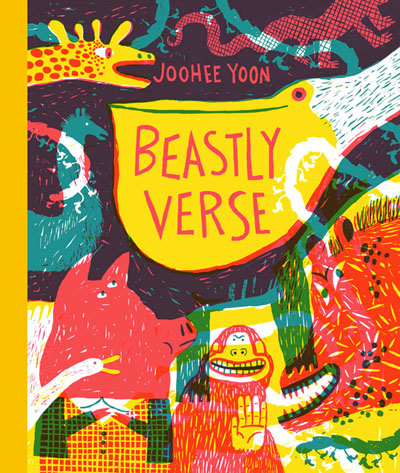
Beastly Verse

- 그림작가 윤주희(JooHee Yoon)
- 글작가 JooHee Yoon
- 출판사 Enchanted Lion Books
- 페이지48 쪽
- 발행일2015-04-07
- 수상내역
책 내용
Poetry and children belong together, and for a long time, the music and playfulness of verse wove itself through children"s days and lives. Beastly Verse aims to help return the wonder of poetry to children"s lives through sixteen exquisitely illustrated poems, four of which have the surprise and pleasure of being foldouts. Consisting of playful as well as powerfully memorable poems, Beastly Verse transports the reader into a richly worded world of tigers, hummingbirds, owls, elephants, pelicans, yaks, snails, and even telephones! A playful romp through verse, rhyme, and gorgeous images, this book carries children into the poetic realm in a way that is not only fun and inviting, but inspiring as well! Representing poems from Anonymous, as well as some lesser well-known poets, this volume also includes poems from Lewis Carroll, William Blake, Robert Desnos, Hilaire Belloc, William Cowper, Christina Rossetti, and D.H. Lawrence. Both short and long, these poems can be read and reread, committed to memory and enjoyed all life long.
출판사 보도자료
From School Library Journal
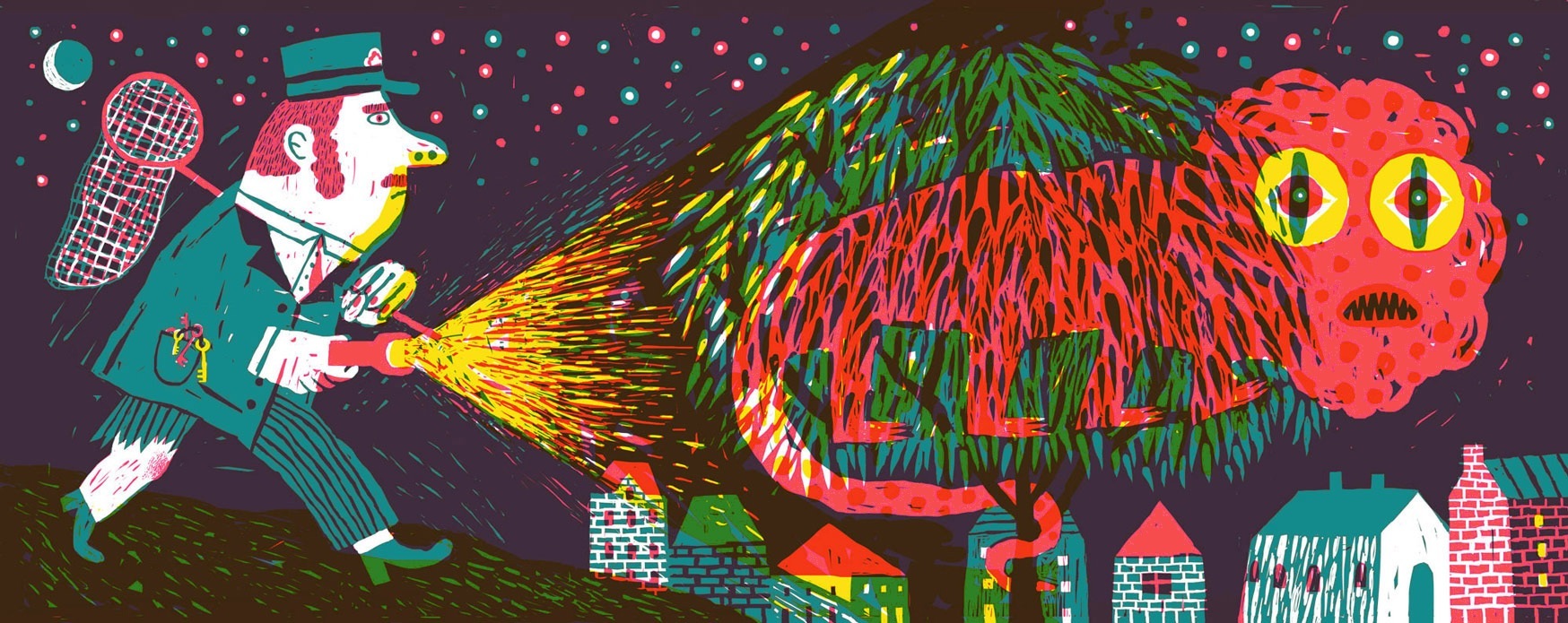
K-Gr 4—Yoon"s bold imagination is evidenced by her illustrations of these 16 animal-related poems by an eclectic group of writers including Lewis Carroll, D.H. Lawrence, and surrealist Robert Desnos. The verses vary from the nonsensical, such as Laura E. Richards"s 'Eletelephony,' to the sublime, such as Walter de la Mare"s 'Dream Song.' By combining printmaking, drawing, and digital techniques and relying upon three Pantone colors, Yoon has created a work of art, full of vibrant colors, striking patterns, and playful layouts. To capture William Blake"s 'The Tiger,' for instance, Yoon uses a gatefold that reveals part of the tiger amid a background of wild forest ferns on each page, with the color scheme moving from greens to yellows, until the tiger"s head emerges, ablaze like the sun. VERDICT An excellent, innovative approach to poetry.—Teresa Pfeifer, The Springfield Renaissance School, Springfield, MA
Review
'Gleefully distinctive stylings, fluorescent colors, and beautiful bookmaking should make an eager new audience for these old poems.' -- Kirkus Reviews
'Here is William Blake’s “The Tiger” burning bright amid inky-green foliage on a page that folds out to show his fearful symmetry. Here too is Lewis Carroll’s “The Crocodile,” set against a subtly hilarious illustration that shows not only the little fish swimming into the monster’s “gently smiling jaws” but the skeletons of those who have already made the trip. Though the book concludes with Walter de la Mare’s drowsy “Dream Song,” this gorgeous compendium is so stimulating that it’s probably best read in the bright light of day.' -- Meghan Cox Gurdon, The Wall Street Journal
'Half a century after Beastly Boys and Ghastly Girls, legendary artist Tomi Ungerer’s illustrated compendium of famous authors’ verses about brothers and sisters, another singular illustrator of our own era applies the concept to a different domain of the human experience — the inclination toward thinking with animals in making sense of our own lives.
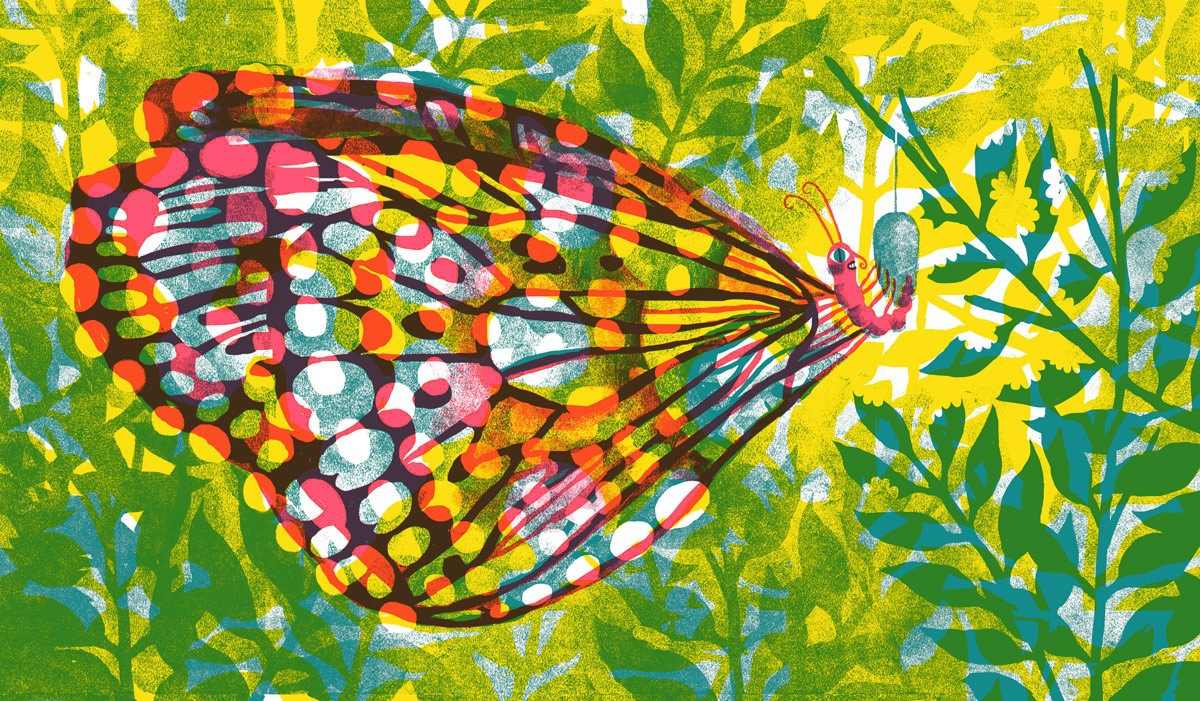
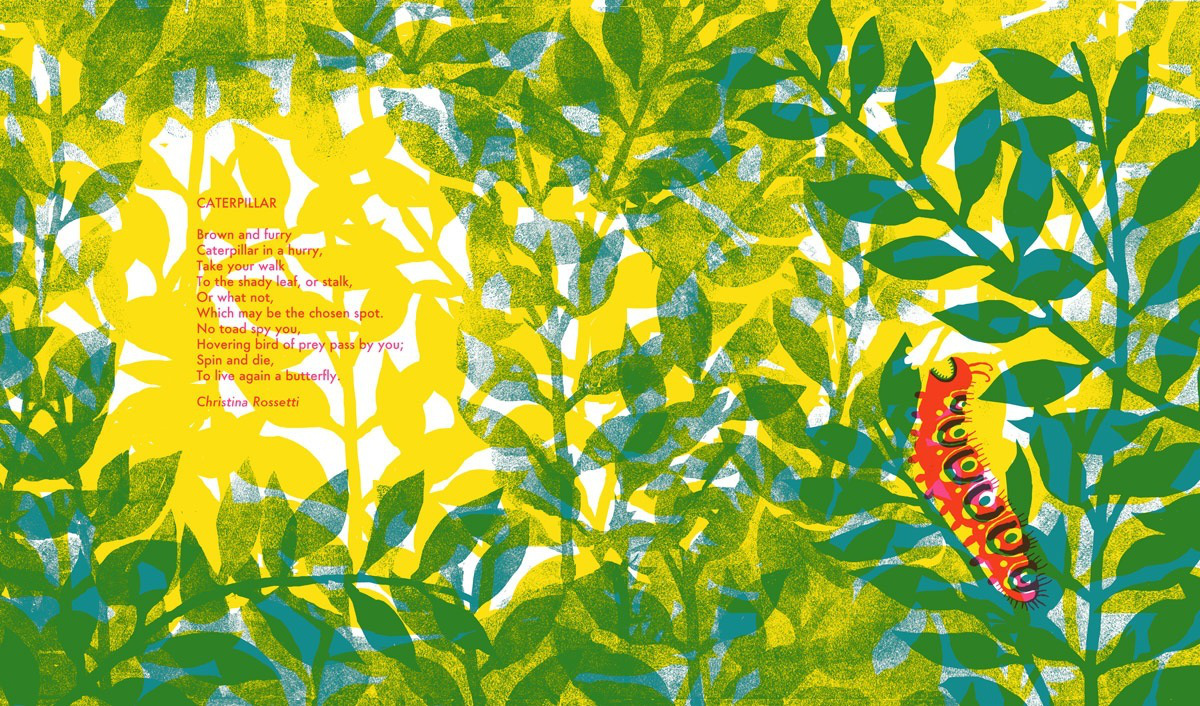
In Beastly Verse (public library), her spectacular picture-book debut...illustrator and printmaker JooHee Yoon brings to vibrant life sixteen beloved poems about nonhuman creatures, real and imagined — masterworks as varied in sentiment and sensibility as Lewis Carroll’s playful “The Crocodile,” D.H. Lawrence’s revolutionarily evolutionary homage to the hummingbird, Christina Rossetti’s celebration of butterfly metamorphosis, and William Blake’s bright-burning ode to the tiger.' -- Maria Popova, Brain Pickings
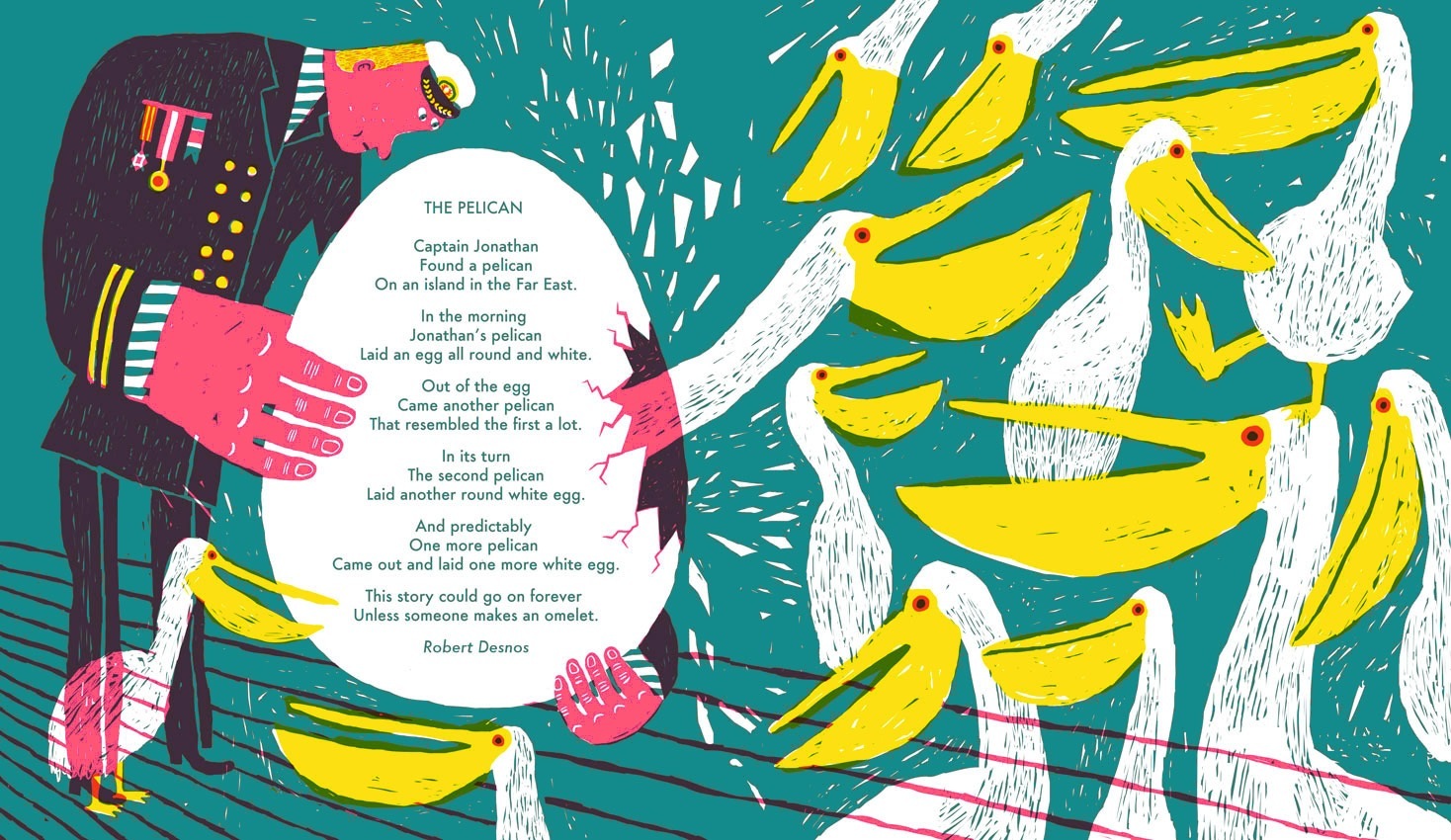
'In her U.S children’s book debut, Yoon creates a monstrous menagerie to accompany 16 poems about animals real and imagined. Her bold, vintage-looking prints use only three colors—a lurid yellow, bright pink, and creamy teal—that overlap to create secondary shades. The sharply contrasting colors make the grinning, grimacing, snarling creatures seem to pulse with electricity, and foldout pages enhance the sense of movement. [...] A fierce and fresh bestiary.' -- Publishers Weekly
“JooHee Yoon’s “Beastly Verse” is very much about its pictures. Three-color illustrations of critters fill up page after intense page, cheerily aggressive, goofy, beastly-friendly. Yoon’s poem selection is economical, intelligent, even hip.”
-- DAISY FRIED, The New York Times
“Beastly Verse is a mischievously beautiful work of art. This book of 16 poems is simultaneously gorgeous, thrilling, and very funny. . . This book should certainly be hailed and celebrated for its incredible design and artwork — as far as books of poetry go there’s nothing I’ve found to rival this book. The use of colors and layout are nothing but perfect. The illustrations match, reflect, and elevate poems you didn’t really think could be added to — and yet here it is.”
-- The Picture Book Review
“This is a collection of animal poems. . . with gatefold surprises and Yoon’s distinctive and stylized art, so vivid in its palette that the spreads pop off the page.”
-- Seven Impossible Things
“The poems are cleverly selected for child appeal and yet many of them aren’t specifically children’s poetry, allowing children to stretch a bit and learn more about poetry and their own reactions to it . . . The illustrations here are the star and what will have children and adults alike picking up the volume.”
-- Waking Brain Cells
일러스트레이터 소개
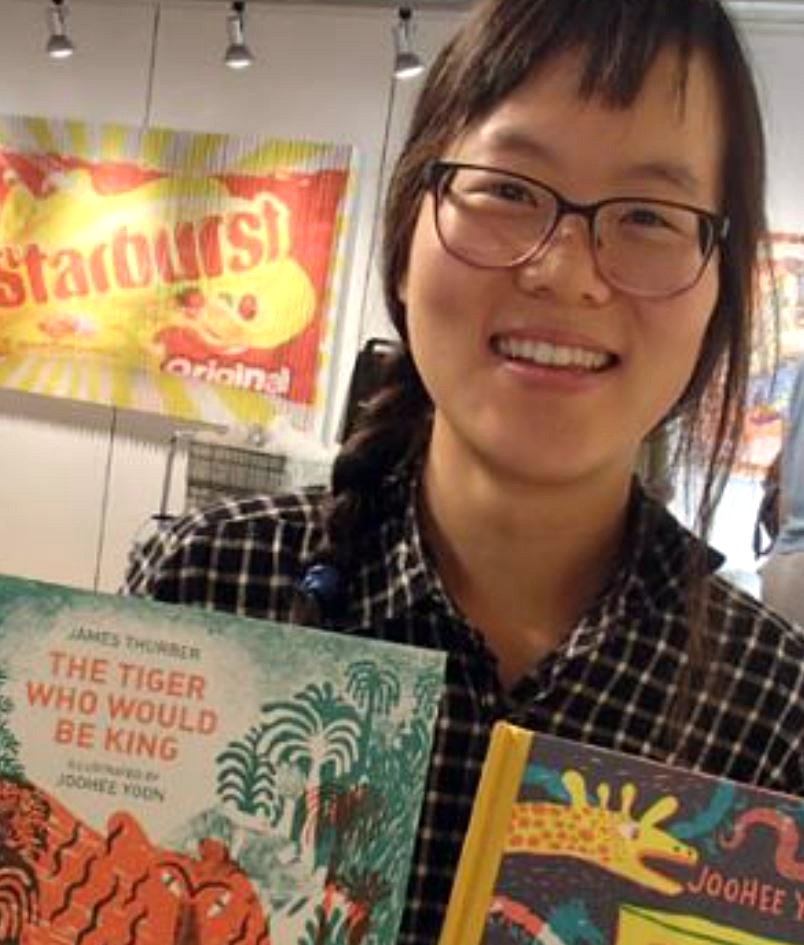
윤주희 작가는 현재 미국에서 그림책작가이자 판화작가로 활동중입니다.
JooHee Yoon is an illustrator and printmaker. She regularly contributes to publications such as the New York Times, Le Monde and the Washington Post, in addition to working on her own book projects. JooHee’s original pieces have been exhibited in gallery shows throughout the world, including the Bologna Children’s Book Fair.