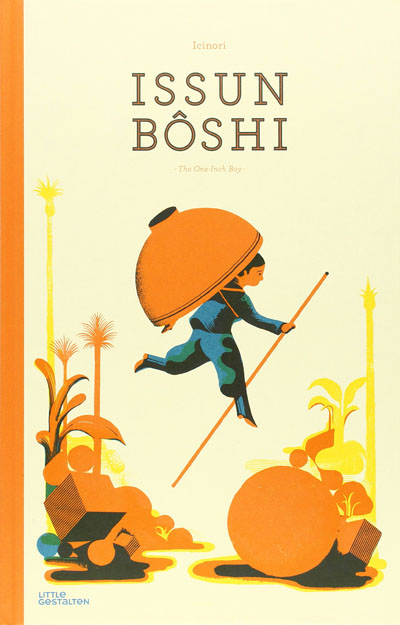

책 내용
This classic Japanese fairy tale tells the story of Issun Boshi, the tiny son of an old, long childless couple. Tiny and brave--these are the two most striking characteristics of Issun Boshi. His mother had longed to have a child for so many years that she finally added \"even if it is a very small one\" to her wish. When the elderly couple did in fact bear a son, he turned out to be only one inch high. He was thus called Issun Boshi, Japanese for one-inch boy. Although his parents raised him very lovingly, Issun Boshi realized one day that he would not grow any taller. He then left his home to set off on a journey to find his place in the world. Because he saw himself as a swordfighter, a samurai, he made sure to take along the right equipment: a needle was his sword, a soup bowl was his boat, and a chopstick was its rudder. As in any proper fairy tale, Issun Boshi is tested in several adventures. He handles himself so bravely that, in the end, he is rewarded with just the right princess.

출판사 보도자료
From School Library Journal
K-Gr 2—This classic Japanese folktale about a couple who wish for a little boy and find themselves the parents of a child who measures a mere inch has been retold in collections and as a single narrative in picture-book format many times. Issun Bôshi fails to grow in stature, but he is brave and determined and sets out into the world with a needle serving as his samurai sword and a rice bowl for his boat. He finds a place at court, is swallowed by an ogre, pricks the monster"s stomach, and escapes capture. The story is so beloved that it has influenced television shows and video games. This retelling is illustrated in accomplished four-color prints in hues that range from vivid to lurid. The graphic composition is powerful, but the bold, posterlike aesthetic might be more impressive to adults than to children. Every children"s library should have a version of Issun Bôshi in its folklore collection, however, and there is only one other picture book edition widely available at this time. If a replacement copy is needed, this one is a reasonable choice.—Miriam Lang Budin, Chappaqua Library, NY
Review
\"The arrestingly unusual illustrations will draw creative audiences, and the smooth retelling of a tale rarely heard by American kids will enliven readaloud sessions and provide a counterpoint to tiny European folktale heroes.\" The Bulletin of the Center for Children"s Books, January 2015
\"You rarely find such a meticulous combination of stunning art and melodic text as located here. Adapted from a Japanese folktale, Issun Bôshi by Icinori is a stunner. Regardless of whether or not you collect fairy and folktales, you need this on your shelf. Stat. Issun Bôshi, I am happy to say, never disappoints. It skips, it hops, it dives, it sings. It entertains fully and leaves the reader wanting more. It does not, therefore, ever come across as anything but one of the finest folktale adaptations you"ve ever seen. High praise. Great book. Must buy.\" - School Library Journal
\"...the lively text reads aloud well. There are few picture-book versions of this traditional tale, and children will enjoy the plucky hero and the vivid, eclectic illustrations.\" -Booklist
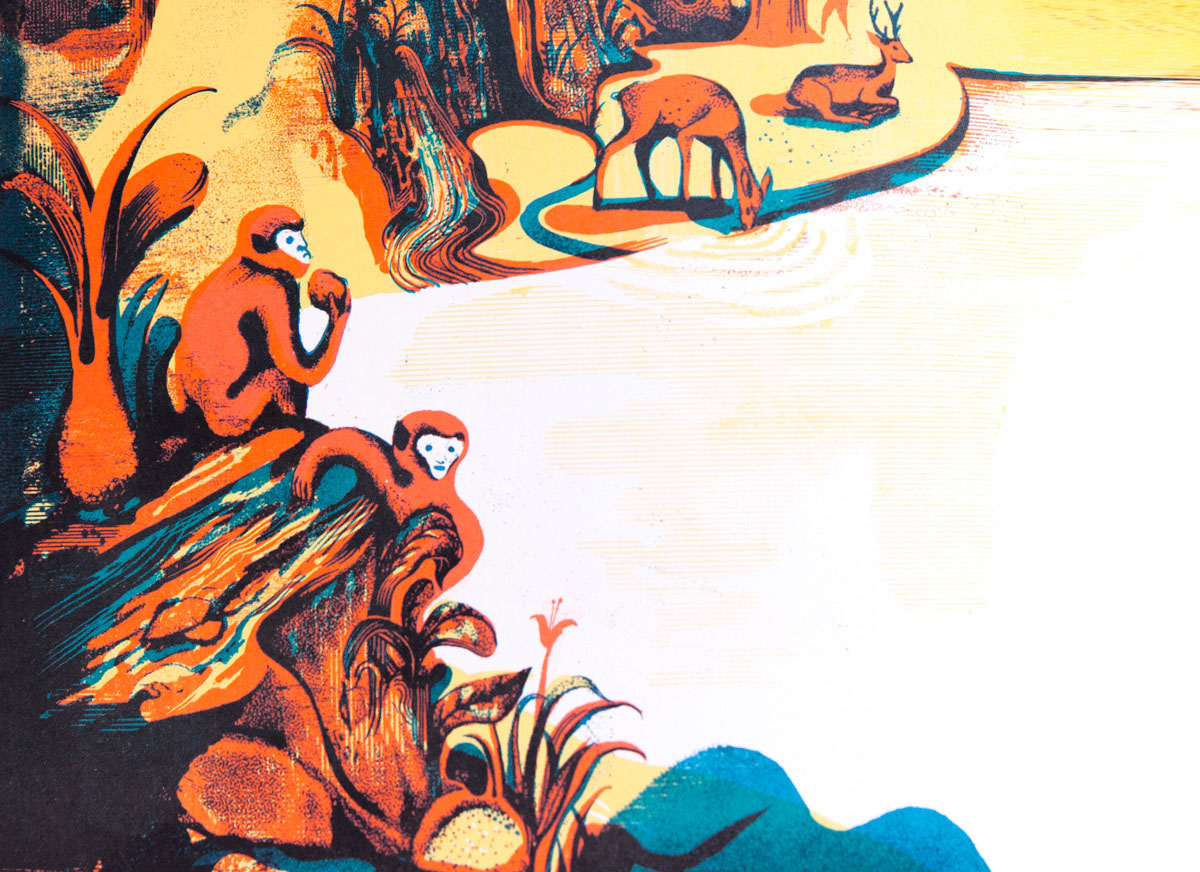
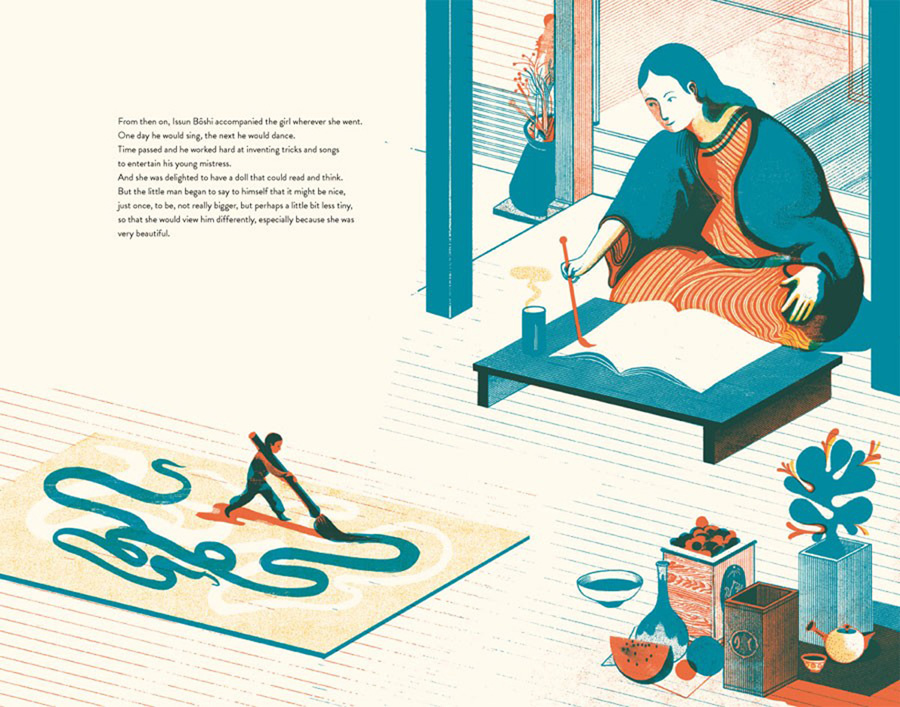
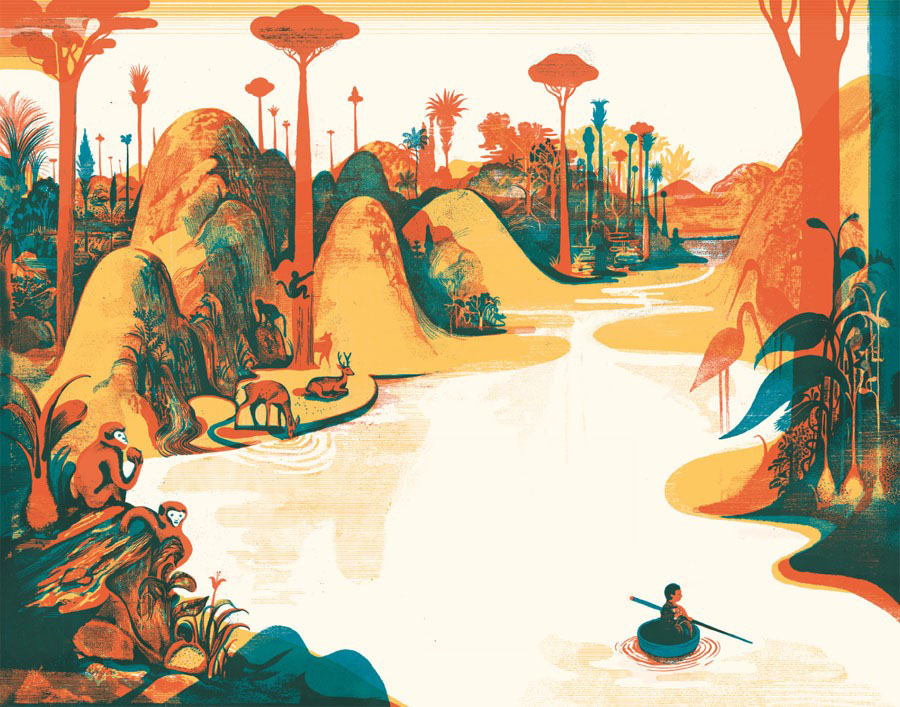
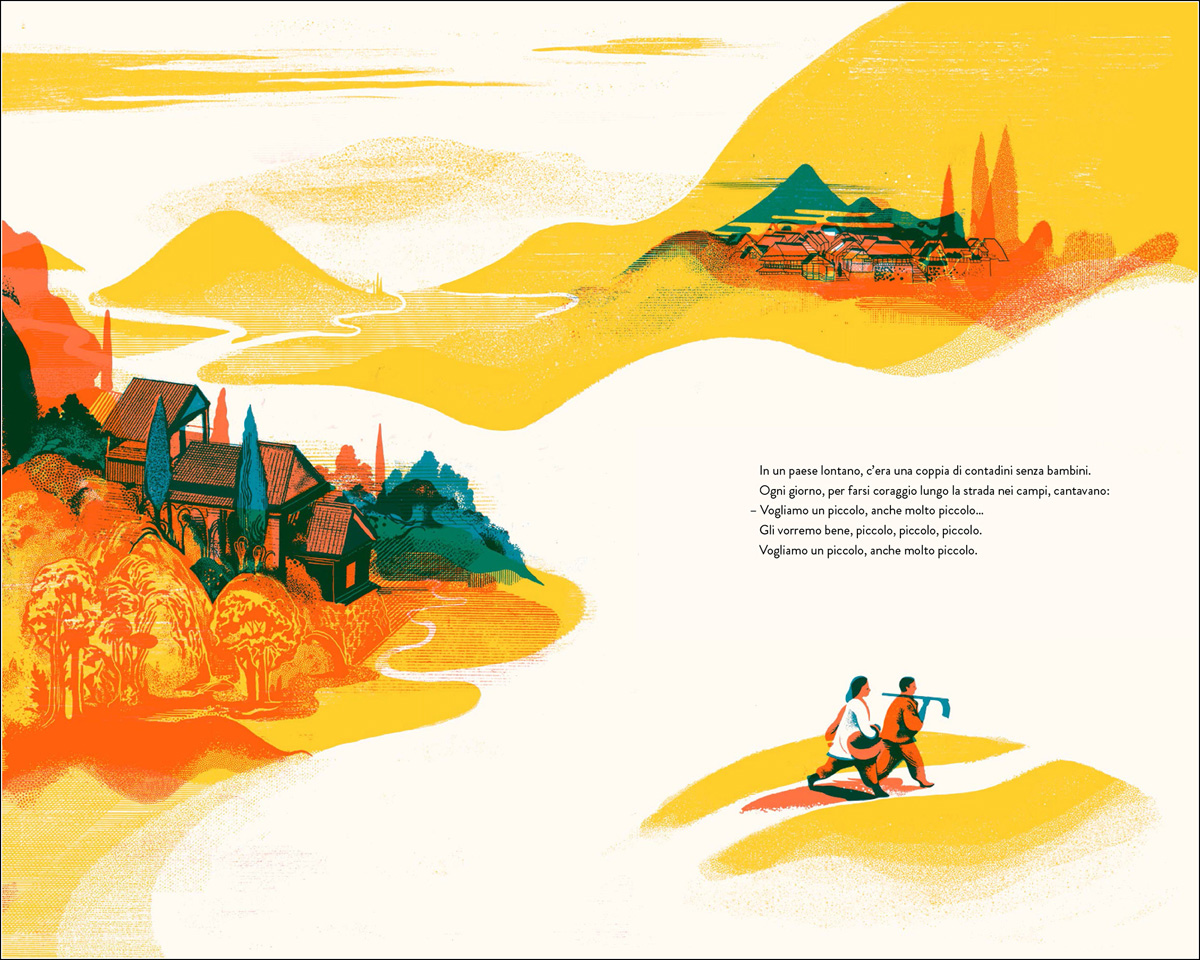
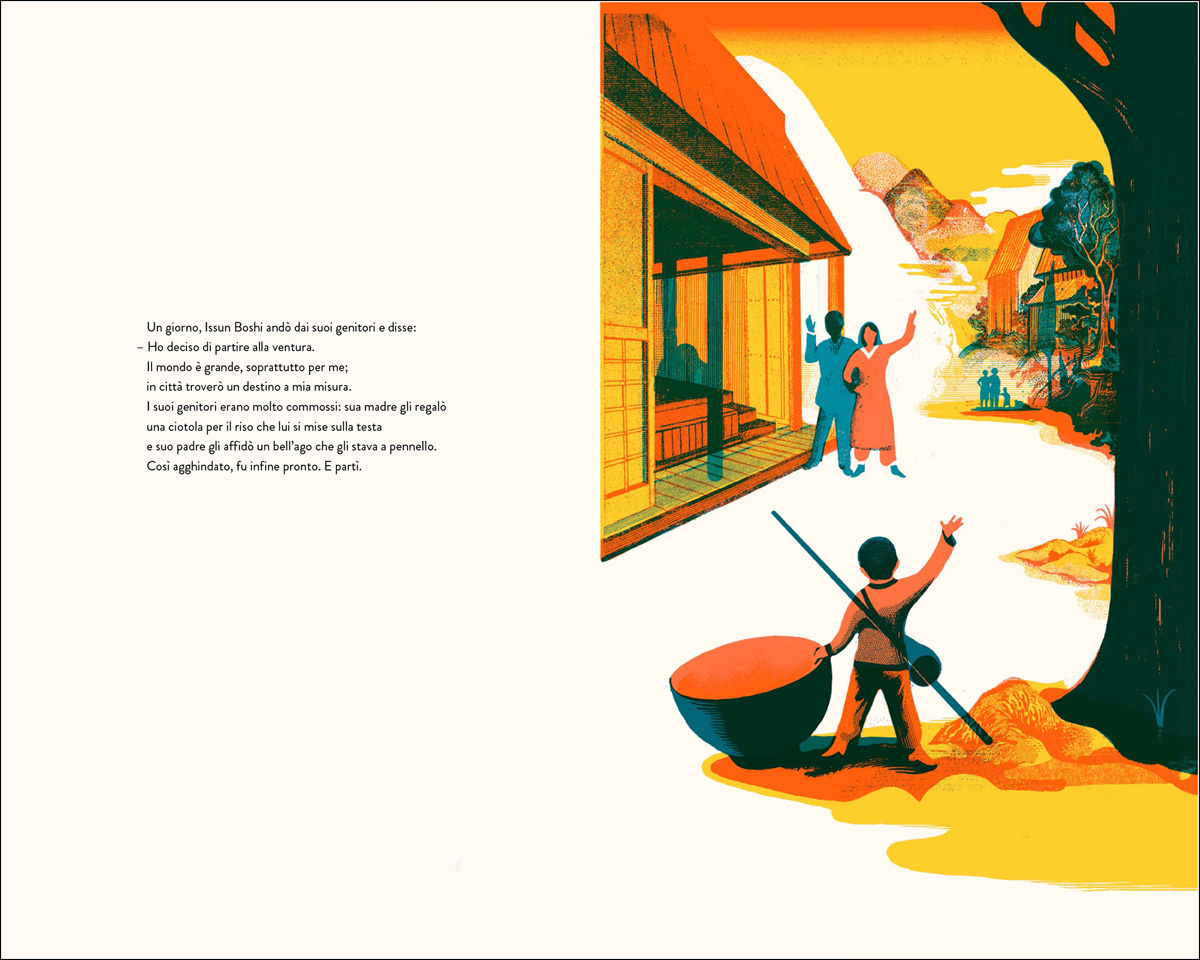
\"Breathtaking silkscreenlike spreads created by the design collaborative Icinori (designers Mayumi Otero and Raphael Urwiller) are the book"s big draw the artists use vermilion, warm yellow, and blue for bold, stylized images that pay homage to visual images of postwar Japan.\" --Publishers Weekly
K-Gr 2—This classic Japanese folktale about a couple who wish for a little boy and find themselves the parents of a child who measures a mere inch has been retold in collections and as a single narrative in picture-book format many times. Issun Bôshi fails to grow in stature, but he is brave and determined and sets out into the world with a needle serving as his samurai sword and a rice bowl for his boat. He finds a place at court, is swallowed by an ogre, pricks the monster"s stomach, and escapes capture. The story is so beloved that it has influenced television shows and video games. This retelling is illustrated in accomplished four-color prints in hues that range from vivid to lurid. The graphic composition is powerful, but the bold, posterlike aesthetic might be more impressive to adults than to children. Every children"s library should have a version of Issun Bôshi in its folklore collection, however, and there is only one other picture book edition widely available at this time. If a replacement copy is needed, this one is a reasonable choice.—Miriam Lang Budin, Chappaqua Library, NY
Review
\"The arrestingly unusual illustrations will draw creative audiences, and the smooth retelling of a tale rarely heard by American kids will enliven readaloud sessions and provide a counterpoint to tiny European folktale heroes.\" The Bulletin of the Center for Children"s Books, January 2015
\"You rarely find such a meticulous combination of stunning art and melodic text as located here. Adapted from a Japanese folktale, Issun Bôshi by Icinori is a stunner. Regardless of whether or not you collect fairy and folktales, you need this on your shelf. Stat. Issun Bôshi, I am happy to say, never disappoints. It skips, it hops, it dives, it sings. It entertains fully and leaves the reader wanting more. It does not, therefore, ever come across as anything but one of the finest folktale adaptations you"ve ever seen. High praise. Great book. Must buy.\" - School Library Journal
\"...the lively text reads aloud well. There are few picture-book versions of this traditional tale, and children will enjoy the plucky hero and the vivid, eclectic illustrations.\" -Booklist
\"Breathtaking silkscreenlike spreads created by the design collaborative Icinori (designers Mayumi Otero and Raphael Urwiller) are the book"s big draw the artists use vermilion, warm yellow, and blue for bold, stylized images that pay homage to visual images of postwar Japan.\" --Publishers Weekly
일러스트레이터 소개
Icinori is the publishing project of Mayumi Otero and Raphael Urwiller. Together they produce limited edition artist book that are hand printed and bound. Below are just a couple of examples of their incredible craftsmanship.