- 그림작가 베아트리체 알레마냐 (Beatrice Alemagna)
- 글작가 잔니 로다리 (Gianni Rodari)
- 출판사 Enchanted Lion Books
- 페이지40 쪽
- 발행일2022-06-21
- 수상내역
책 내용
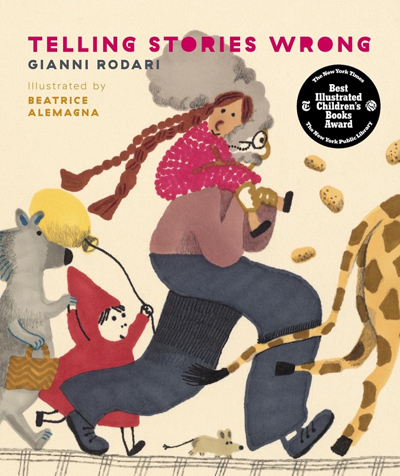
A New York Times/New York Public Library Best Illustrated Children's Book of 2022 ★Everyone knows how "Little Red Riding Hood" goes. But Grandpa keeps getting the story all wrong, with hilarious results!
"Once upon a time, there was a little girl called Little Yellow Riding Hood—" "Not yellow! It's Red Riding Hood!" So begins the story of a grandpa playfully recounting the well-known fairytale—or his version, at least—to his granddaughter. Try as she might to get him back on track, Grandpa keeps on adding things to the mix, both outlandish and mundane! The end result is an unpredictable tale that comes alive as it's being told, born out of imaginative play and familial affection. This spirited picture book will surprise and delight from start to finish, while reminding readers that storytelling is not only a creative act of improvisation and interaction, but also a powerful pathway for connection and love.
Telling Stories Wrong was written by Gianni Rodari, widely regarded as the father of modern Italian children's literature. It exemplifies his great respect for the intelligence of children and the kind of work he did as an educator, developing numerous games and exercises for children to engage and think beyond the status quo, imagining what happens after the end of a familiar story, or what possibilities open up when a new ingredient is introduced. This book is illustrated with great affection by the illustrious artist Beatrice Alemagna (Child of Glass), who counts Gianni Rodari as one of her "spiritual fathers."
출판사 보도자료
- A New York Times/New York Public Library Best Illustrated Children's Book of 2022!
- Selected for the Publishers Weekly 2022 Holiday Gift Guide
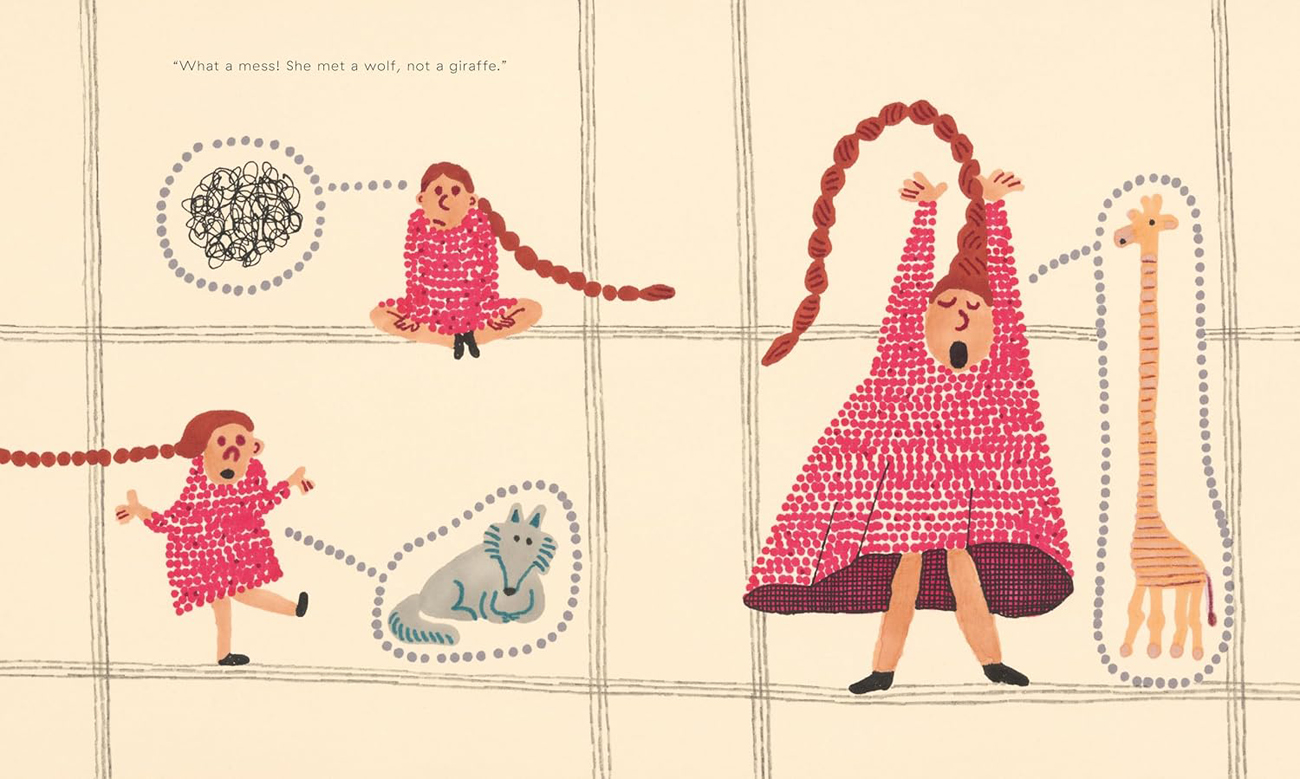
★ "Rodari’s raucous text is basically a conversation: A grandpa tells the story of 'Little Red Riding Hood' all wrong, giving the heroine a yellow hood, the wrong mission, an encounter with a giraffe and so forth. His granddaughter passionately corrects him while thoroughly enjoying each fresh deviation from the classic tale. Alemagna’s textured, inviting marker drawings provide many punch lines of their own, and the pictures become a joyful celebration of on-the-fly storytelling."―Author Emily Jenkins, 2022 New York Times/New York Public Library Best Illustrated Children's Book Award Jury
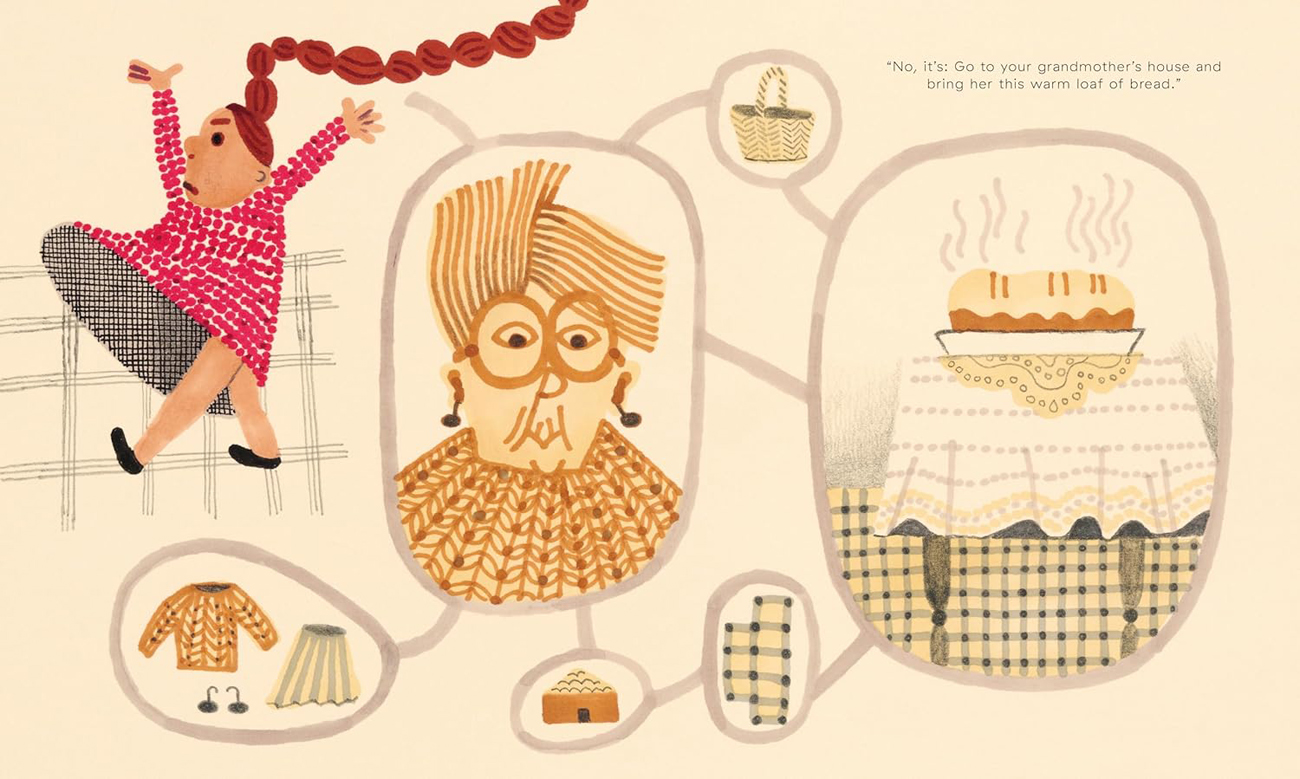
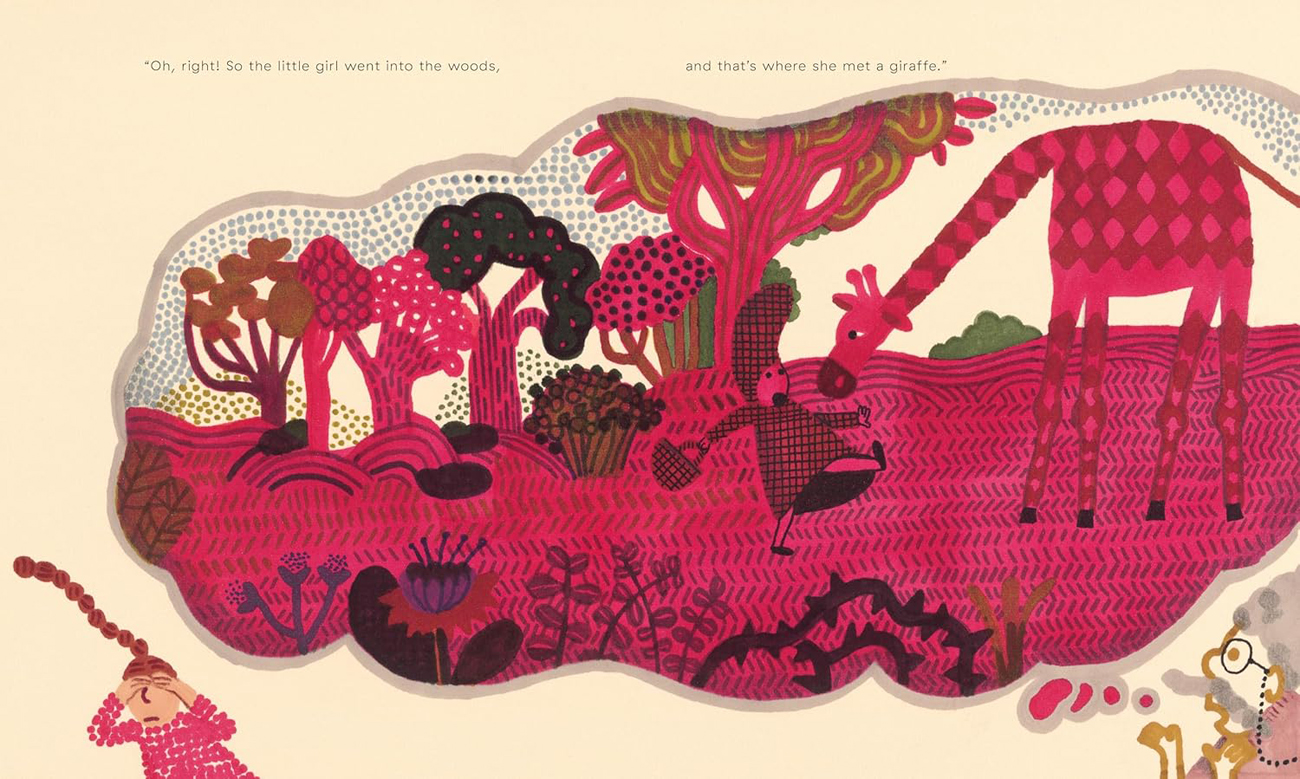
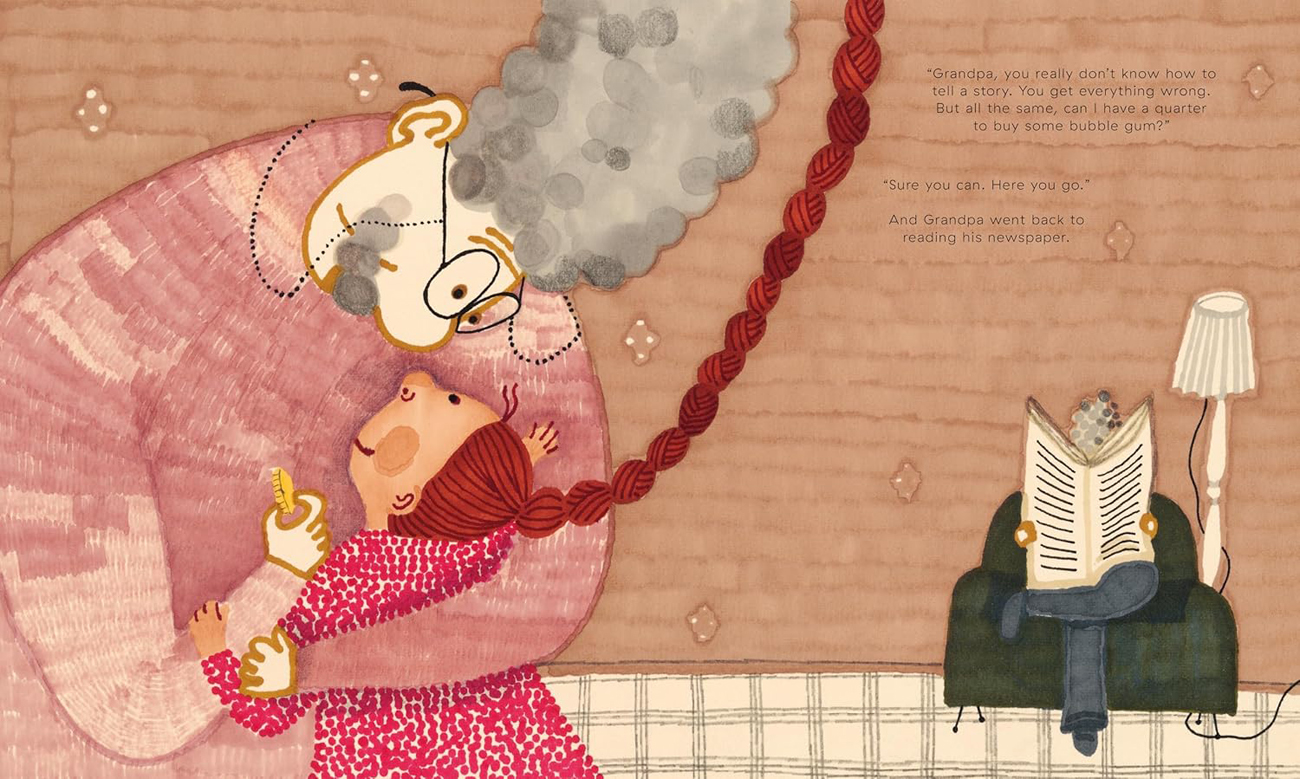
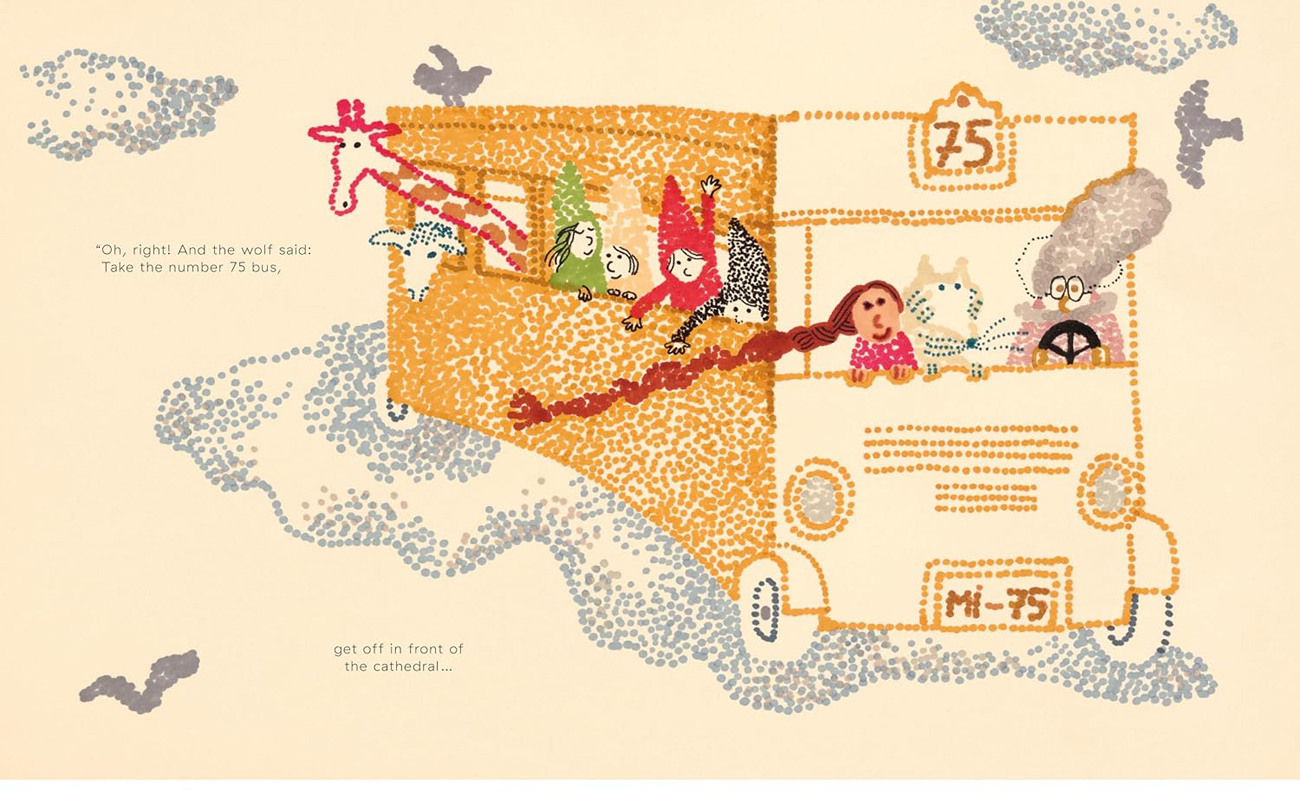
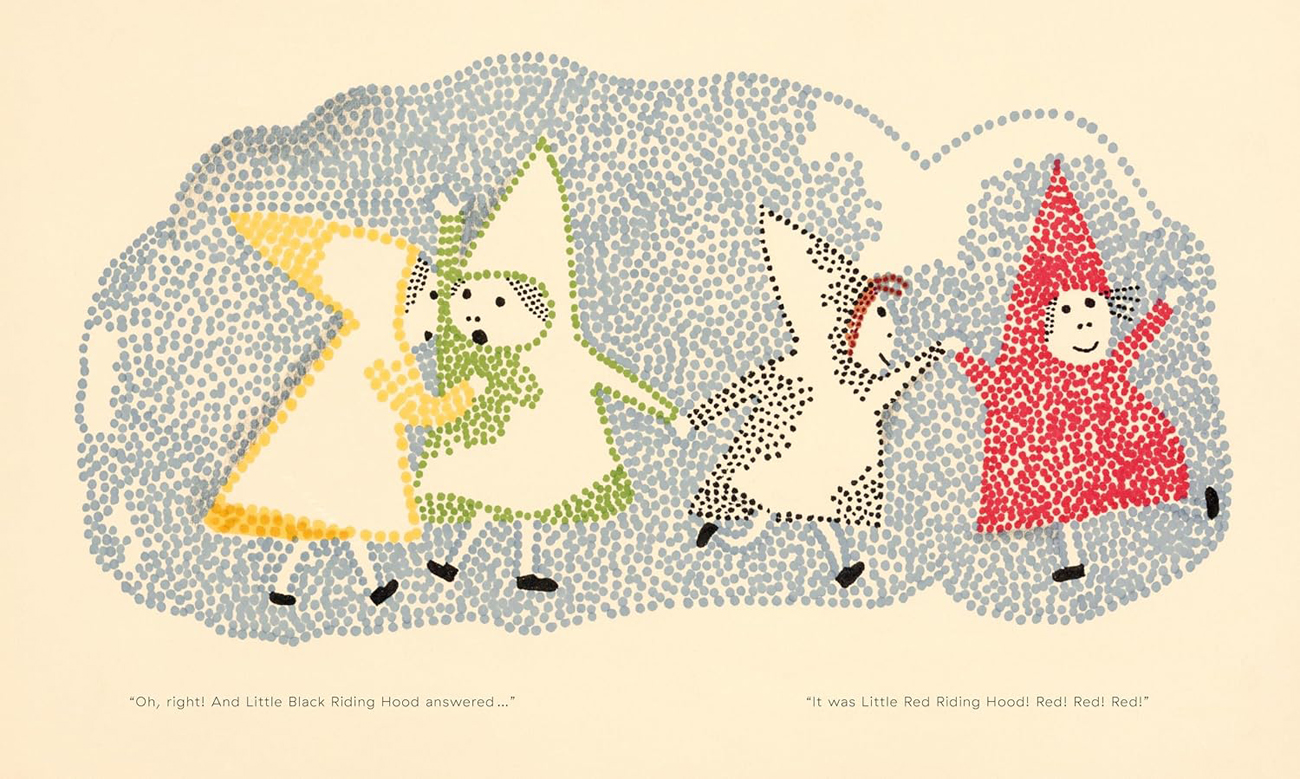
“Alemagna’s marker-and wash-textured illustrations, predominantly composed of blobs and circles, materialize into both reality (…Grandpa’s voluminous hair and mustache, the pink-skinned child’s pink dress and gangly braids) and narrative chaos (an entire thought bubble of Riding Hoods with cloaks of various hues), leading up to a grand finale that shows Grandpa at the helm of a city bus filled with characters who have appeared in his woolgathering. When Grandpa returns to his newspaper, and his grandchild heads to the store with a quarter for bubble gum, a final hug makes it clear that they share the same sense of storytelling mischief.”―Publishers Weekly
“Here is a humorous story of a grandfather retelling ‘Little Red Riding Hood’ to his granddaughter, and telling it hilariously wrong. The child keeps correcting him, but it doesn’t seem to get him back on track. And why bother? Anyone who reads this book will see that the heart of storytelling with children is not the accurate retelling of plot but rather the connection and creative interaction between adult and child. Alemagna’s well-composed and multilayered mixed-media illustrations cleverly support the transition between the two speakers, as the narrative is related solely through dialogue; thought bubbles amusingly show the very different stories unfolding in each of the character’s heads. Young readers already familiar with ‘Little Red Riding Hood’ may enjoy this story most, but it will be great fun for all, nonetheless.”―The Horn Book
“With its combination of the absurd along with its imaginative creativity, Telling Stories Wrong is an excellent entry point for [Gianni Rodari's] writing. Lovingly executed illustrations by award-winning artist Beatrice Alemagna – who considers Rodari a ‘spiritual father’ – enhance the warmth of the story with great humor and a marvelous sense of play."―Nanette McGuiness, The Riveter
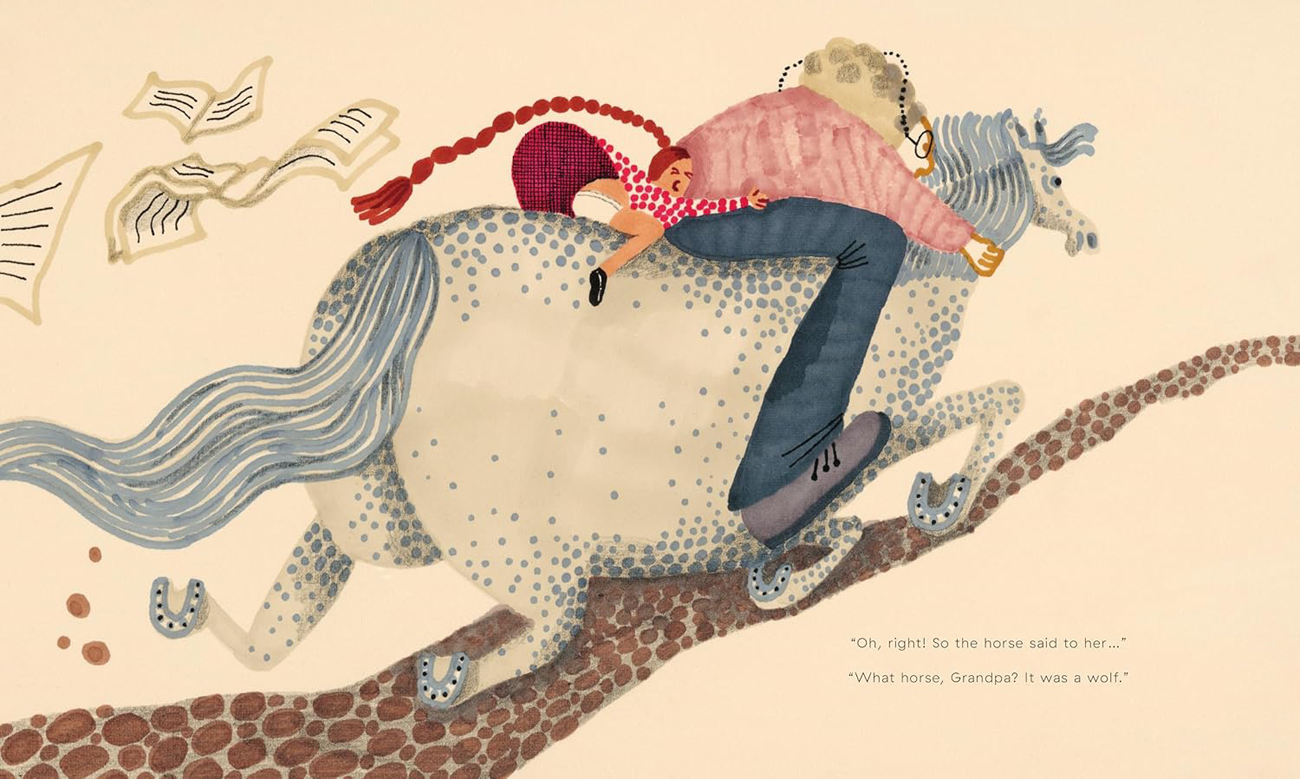
“Gianni Rodari, described as the father of modern Italian kid lit, gets a makeover here of one of his classic Telephone Tales. In this fractured version of Little Red Riding Hood, a grandpa mixes up all the particulars of the story, much to the delight of his squealing granddaughter... At each stage, the little girl emotes expressively, throwing up her arms and imagining (with squishy thought bubbles) all the right and wrong things about the story, crouching on the floor while Grandpa tries to get back to his newspaper. The star here was the fabulous illustrations, combined with gorgeous book design. Alemagna uses Magic Markers (possibly on dampened paper), which mimic watercolor and their characteristic spread, but allow her to create her own blobby version of pointillism… The large thick pages, with their buff color would make for really standout viewing of the large goofy pictures, like Grandpa and the girl racing off on a large horse (we only see their behinds, including the girl’s underwear!) with the pesky newspaper pages conveniently blowing away.”―Susan Harari, Keefe Library (Boston Latin School, Boston, MA), Youth Services Book Review
“We see nutty books all the time. The difference here is that this particular nutty book has a lot of heart and affection between the characters that comes through in spite of (or because of?) the kooky storytelling. It’s an ideal book for a grandparent to read to their own offspring’s offspring. Especially if that kid can’t stand it when grown-ups get facts wrong. Here’s one fact that isn’t wrong: This book is delightful. A win of an import.”―Betsy Bird, A Fuse 8 Production (A School Library Journal Blog)
“A little girl is listening to her grandfather tell the story of ‘Little Red Riding Hood,’ but he keeps getting important details wrong... The laugh-out-loud developments will tickle readers, but by the time Grandpa finishes his rendition of ‘Little Red,’ the little girl has had enough of his stories and leaves him to his newspaper—likely the clever old man’s plan all along! Fantastic childlike illustrations by Alemagna capture the playful spirit of the story, using simple marker drawings to show all the hilarious ways Grandpa goes off script. Originally published in Rodari’s Italian classic Telephone Tales, this picture book is perfect for reading aloud and for fans of fractured fairy tales.”―Booklist
About the Author
Beatrice Alemagna has written and illustrated dozens of children’s books, which have received numerous awards all over the world and have been translated into 14 languages. The author-illustrator of two New York Times Best Illustrated books, she has also been nominated for the Astrid Lindgren Memorial Award seven times and shortlisted for the Hans Christian Andersen Award twice. Enchanted Lion has published four of her picture books: The Wonderful Fluffy Little Squishy; Child of Glass; Telling Stories Wrong; and the forthcoming You Can't Kill Snow White, a picture book for teens and adults, published under Enchanted Lion's Unruly imprint. Born in Bologna, Italy, Alemagna lives and works in Paris, France.
일러스트레이터 소개
인스타 : https://www.instagram.com/beatricealemagna
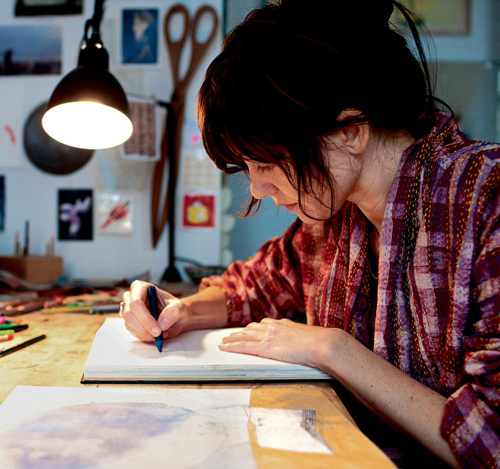
1973년 이탈리아 볼로냐에서 태어나 지금은 프랑스 파리에서 그림책 작가로 활동하고 있습니다. 1996년 프랑스 몽트뢰유에서 삽화가들에게 주는 "미래의 인물상" 을 받았고, 2001년에는 프랑스 국립현대 예술협회(FNAC)에서 선정한 "주목할 만한 아동문학가에게 주는 상" 을, 2007년에는 볼로냐 라가찌 상을 받았습니다. 작가는 그림 그를 때는 어린시절로 돌아가 목동이 된 듯한 느낌으로 양을 치는 듯한 느낌을 받는다고 합니다. 그림책 『어린이』에서는 유리알 같은 낱말과 시를 읽는 듯한 그림으로 어린이 세계를 담았습니다. 이탈리아 볼로냐 출신인 알레마냐는 현재 파리에서 활동중이다. 그녀는 교육을 통해서는 습득할 수 없는 언어를 지닌 대표적인 예술가일 것이다. 그 언어가 기법이나 재능의 영향을 받지 않은 시작적인 시의 모습으로, 마음에서 자연스럽게 우러나온 것 같다는 의미에서 그렇다. 이런 점에서 그녀가 받은 교육은 흥미롭다. 문화의 세례를 받고 자라면서 브루노 무나리, 에마누엘레 루차티, 레오 리오니, 토미 웅게러 등의 책에 푹 빠졌다. 그녀는 잔니 로다리, 이탈로 칼비모, 그림 형제의 동화를 읽었고, 자신이 지금 하는 일은 이미 여덟살 때부터 원했던 일이라고 말한다. "어렸을 때, 그림이 그려진 책들은 나만의 비밀 장소였어요. 나는 몇 시간동안이나 책장을 넘겨가며 종이 냄새를 맡곤 했지요. 그 책들은 나를 꿈꾸게 해 주었어요."
청소년기에는 문학을 공부했다. 가족들은 오로지 그림만 그리고 싶었던 그녀에게 좀 더 다양한 문화 교육을 받은 뒤 미술학교에 다니게 했다. 마침내 알레마냐는 우르비노의 산업디자인 전문학교에 입학했다. 그런데 그녀는 이 학교가 드로잉은 외면하고 디자인, 타이포그래피, 편집 그래픽만 중시한다는 것을 알게 되었다. 당시 그녀는 이 점을 견딜 수 없었다. 그 후 학교에서는 일러스트레이션이 선택 과목으로 개설되었다. 여름 학기마다 그녀는 주로 스테판 차브렐과 크베타 파코브스카가 지도하는 단기 일러스트레이션 과목을 들을 수 있었다. 분명히 알레마냐의 그래픽 작품은 순수함이라는 요소를 지켜나가긴 하지만, 그것은 세련된 디자인 솜씨와 결합될 때 강렬하다고 말할 수 있다. 즉 탄탄한 타이포그래피와 그래픽 디자인 기초 교육을 받은 덕에 그녀는 대단히 감수성 넘치고 표현력이 풍부한 시각 언어를 배치할 수 있는 완벽한 구조를 만들어 낼 수 있었던 것 같다. 이 점에 대해서 알레마냐는 이렇게 말한다.
"나는 드로잉 기법도 배운 적 없고, 아크릴이나 수채화 그리는 법도 몰라 괴로웠어요. 그러나 내 나름의 기법을 만들어 보는 게 재미있다는 것을 드디어 깨닫고, 오일이나 파스텔을 무작정 써 보기도 하고, 티슈페이퍼(박엽지)나 털실로 실험하기도 했어요. 그래픽 공부 덕분에 구성과 무게 및 공간 감각이 생겼다고 나는 확신해요. 내 드로잉에 대해 말해보자면 아마도 거기에는 '순수성' 그러니까 내 유년기와 가까운 모습이 있었던 것 같아요. 그것은 정확한 스타일이나 기교에 '완전히 묻혀 버리지는' 않았어요. 이것을 나는 요즘 들어서야 귀하게 여길 줄 알게 되었지요. 내 속에는 내가 너무도 많아 저마다 다르게 표현된다는 것을 알고 있어요. 만약 내가 특별한 기법을 배웠거나 익혔다면, 특정한 작업 방식에 안주했을 테고, 그러면 이렇게 무한 '탐구'를 하지는 않았을 거예요. 이것은 힘든 과정이지만 속속들이 나만의 것이에요. 내가 마음에 와 닿지 않는 텍스트에는 그림을 그릴 줄 모르고, 내 책들이 웬만하면 서로 비슷하지 않은 것은 바로 이 때문이지요. 내 책들은 한 권 한 권마다 나의 발전 단계를 나타내고 투영해 준답니다 " _ 2016, 마틴 솔즈베리는 「100권의 그림책」.