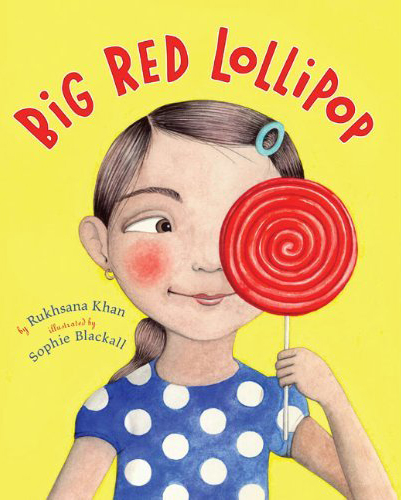

- 그림작가 소피 블랙올 (Sophie Blackall)
- 글작가 Rukhsana Khan
- 출판사 Viking Juvenile
- 페이지40 쪽
- 발행일2010-03-04
- 수상내역
책 내용
Grade 2—This sibling-rivalry story compares well with Kevin Henkes"s Sheila Rae"s Peppermint Stick (HarperCollins, 2001). When Rubina comes home with a birthday-party invitation, her mother asks why people celebrate birthdays, as her culture does not, and insists that Rubina take her little sister along despite the older child"s insistence that 'they don"t do that here.' Sana is a brat par excellence at the party and steals Rubina"s candy. It"s a long time before Rubina is invited to another one. Expert pacing takes readers to the day when Sana is invited to her first party. Whereas the embarrassing scenario could be repeated with the girls" younger sister, Rubina convinces her mother to reconsider, and Sana is allowed to go solo. The beauty of the muted tones and spareness of the illustrations allow readers to feel the small conflicts in the text. The stylistic scattering of East Indian motifs from bedspread designs to clothing communicate the cultural richness of the family"s home life while the aerial views, especially the rooms through which the siblings chase each other, are priceless. The book is a thoughtful springboard for discussion of different birthday traditions and gorgeous to the eye. *Starred Review* Siblings everywhere will see themselves in this story, even though it is rooted in the experience of an immigrant family. Rubina is invited to a birthday party, and her little sister Sana screams, I wanna go too! Their mother, Ami, insists that Sana be taken along, despite Rubina’s vigorous protests, and the party turns out as badly as Rubina worries it will. To add insult to injury, after eating the lollipop in her goody bag, Sana almost finishes off Rubina’s. When Sana comes home with her own invitation to a birthday party, their littlest sister wants to attend, and now it’s Sana’s turn to protest. But fair is fair, Ami decrees. In a clever turnaround, Rubina, though sorely tempted to let Sana suffer the embarrassment she did, persuades their mother to let Sana go alone. Khan is of Pakistani descent, and this tale of clashing cultural customs is based on an incident from her childhood. The story (and its lesson) comes to life in Blackall’s spot-on illustrations, which focus on the family, their expressions, and body language. Though the sisters wear western clothes, Ami dresses in more traditional garb, a subtle reminder of how assimilation is transformed from generation to generation. At its heart, though, this is an honest, even moving, commentary on sisterly relationships, and the final rapprochement is as sweet as the lollipop Sana offers Rubina. Preschool-Grade 2
일러스트레이터 소개
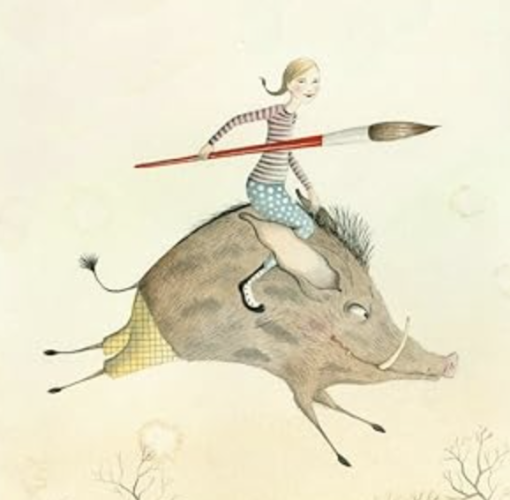
소피 블랙올은 브루클린에 거주하는 호주 출신 작가입니다. 그녀는 아이비와 빈 시리즈를 포함하여 45권이 넘는 어린이 책에 그림을 그렸으며, 2016년 《파인딩 위니》와 2019년 《헬로 라이트하우스》로 랜돌프 칼데콧상을 두 번 수상했습니다. 또한 성인을 위한 책을 쓰고 그림을 그리기도 했습니다. 블랙올은 애니 배로우즈, 케이트 디카밀로, 룩사나 칸, 메그 로소프, 주디스 비오르스트 등 많은 유명 작가들과 협업해 왔습니다. 그녀의 삽화는 뉴욕 타임스, 월스트리트 저널, 워싱턴 포스트, 뉴욕시 교통국(MTA), MoMA 디자인 스토어 등에 실렸습니다. 그녀는 유니세프와 세이브 더 칠드런과 협력하여 국제적인 보건 및 문해력 증진 활동을 펼치는 예술가이자 옹호자로 활동했습니다.